Advancing Intelligence Uphigh, Steering Technology Toward Good | Unisound Showcases the U‑Model Family at WAIC 2026
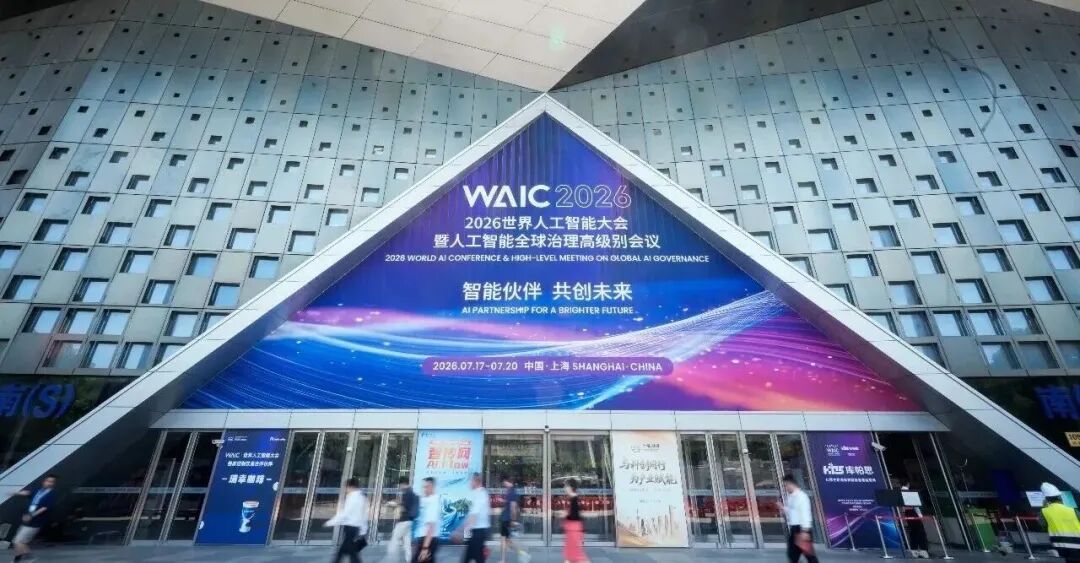
From July 17 to 20, the 2026 World Artificial Intelligence Conference and High‑Level Meeting on Global AI Governance (WAIC 2026), themed “AI Partners for a Brighter Future”, convened in Shanghai. Xi Jinping, President of the People’s Republic of China, attended the opening ceremony and delivered a keynote address, building consensus and charting the course for the development and governance of the artificial‑intelligence industry.
Seventy years have passed since the concept of “artificial intelligence” was first proposed. Today, intelligent technologies are rapidly moving beyond the digital realm into the physical world, redefining the relationship between humanity and AI. Faced with this unprecedented technological wave, President Xi Jinping emphasized that all countries should uphold the people‑centered, upward‑and‑benevolent philosophy, so that artificial intelligence can become a key driver for common prosperity and shared security.
This lends deeper contemporary meaning to WAIC’s theme “AI Partners for a Brighter Future”. A true AI partner must not only possess the capacity to comprehend complex problems and execute sophisticated tasks but also be reliable, controllable and trustworthy. It should continuously push technological boundaries while always serving human values.
For Unisound, the quest to turn AI into genuine intelligent partners for people unfolds along two intertwined practical paths: advancing intelligence uphigh, and steering intelligence toward good. At Booth H1‑D730 of the Shanghai World Expo Exhibition & Convention Center, Unisound presented its U‑Model matrix anchored on the U2 large model as well as three major Agent clusters. Demonstrations spanned sustained model‑capability breakthroughs and the deployment of intelligent agents in healthcare, organizational workflows and daily life. They illustrated how Unisound’s AI partners perceive demands and understand the world, further integrating into workflows to collaborate with humans on task completion. Through these real‑world practices, Unisound responds to the call of our times: keep advancing intelligence upward, and ensure every technological advance acts for the good of humanity.
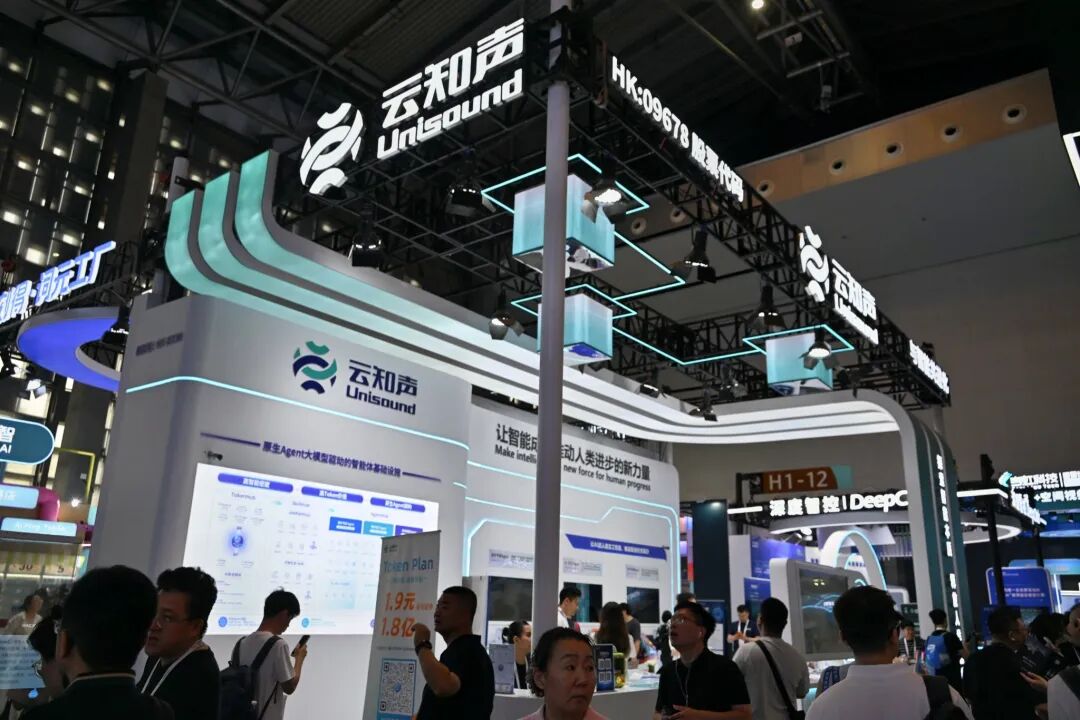
Advancing Intelligence Uphigh | Raising Capability Ceilings Centered on U2
Truly capable AI partners need robust comprehension, perception and execution. At the exhibition, Unisound featured its U‑Model matrix built around U2. Covering general‑foundation large models, speech‑ and vision‑perception models, and professional vertical‑domain models for healthcare, the portfolio pushes dual ceilings of intelligence capability and efficiency. On one hand, models can process complex information and carry out long‑chain tasks. On the other hand, under constrained computing and token costs, each API call delivers greater value, enabling powerful AI to reach real‑world scenarios affordably and efficiently.
U2: Beyond Answering Questions, Toward Accomplishing Tasks
As Unisound’s native‑Agent large model built for individuals, developers and enterprises, U2 features three core innovations: high intelligence density, high token‑level value, and native‑Agent architecture, redefining large‑model efficiency and autonomous performance.
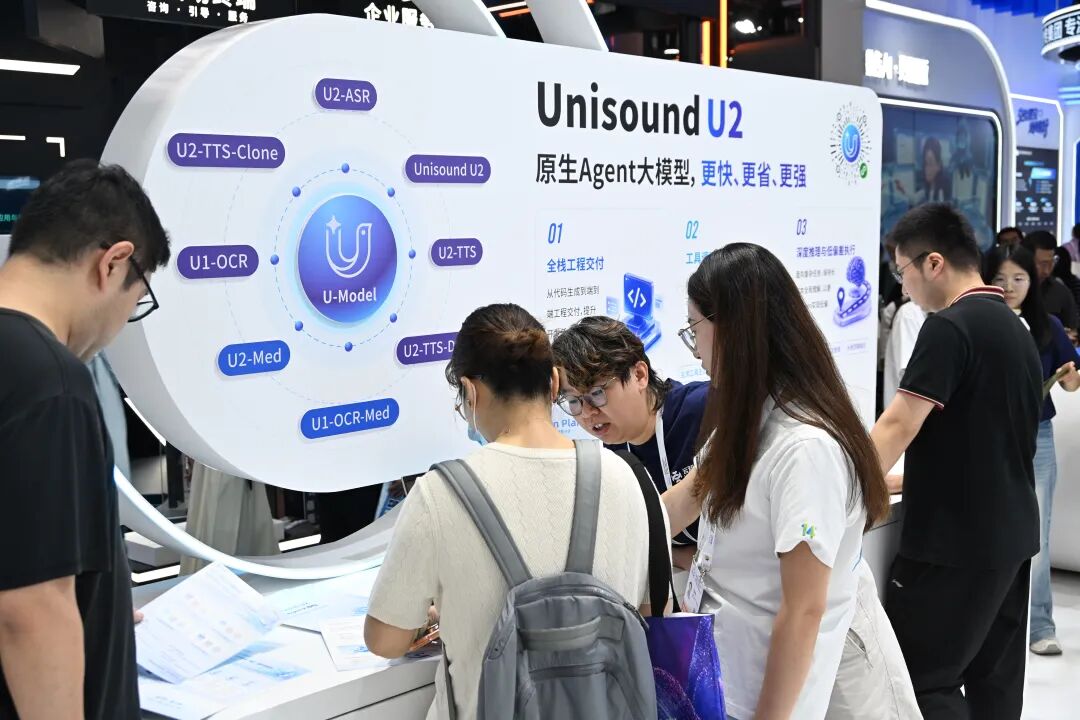
For complex office workflows, software engineering, in‑depth research and multi‑tool collaboration, U2 autonomously decomposes and executes workflows of over 100 steps. It forms complete closed loops spanning requirement interpretation, task planning, environment interaction, tool invocation, iterative error correction and result validation — shifting from merely “giving answers” to actually “getting things done”.
In global large‑model benchmarks, U2 ranks among top‑tier performers across key metrics: long‑context comprehension (AA‑LCR), knowledge reasoning (GPQA Diamond), instruction‑following (IFBench), agent execution (SWE‑bench Verified) and complex‑task handling (WildClawBench). Its overall performance places it within the top 30 on the LLM Stats overall leaderboard, ranking eighth among global model vendors and enabling head‑to‑head competition with leading models. Notably, on LongBench‑V2, a notoriously challenging long‑text‑understanding benchmark, U2 attained 54.4 % accuracy, outperforming Claude Opus 4.7 and demonstrating exceptional capacity for absorbing and reasoning over massive volumes of information.
Multimodal Large‑Model Matrix | Equipping AI with Full‑Sensory Capabilities
Complex tasks demand not just thinking power but also precise perception and expression. The U‑Model builds a multimodal‑perception foundation covering real‑world interaction channels: hearing, speaking and seeing.
- U2‑ASR (Auditory Perception): More than speech‑to‑text transcription, it genuinely “comprehends” utterances. Supporting hundreds of dialects and multiple foreign languages, U2‑ASR maintains over 90 % recognition accuracy in noisy environments and achieves 99.2 % accuracy on the public AISHELL‑1 test set. Its dialect‑recognition performance surpasses mainstream ASR alternatives.
- U2‑TTS & U2‑TTS‑Clone (Vocal Expression): Imparting human‑like warmth to AI voices. Jointly optimized with flow‑matching modules built on pure causal‑attention mechanisms and neural vocoders, U2‑TTS generates natural‑sounding speech that faithfully renders tone, emotion, and subtle human nuances such as breathing and laughter. U2‑TTS‑Clone delivers high‑fidelity voice cloning using merely 5‑15 seconds of reference audio, attaining a MOS naturalness‑similarity score above 4.5. It further supports composite generation (“timbre from Speaker A, emotion from Speaker B”) and cross‑lingual voice replication between Chinese and English, lowering costs for injecting lifelike personality into digital humans and audio‑content production.
- U1‑OCR (Visual Perception): Evolving from character recognition to document understanding. Moving past traditional character‑only OCR limits, U1‑OCR understands documents and extracts structured insights. It accurately reconstructs intricate layouts including nested tables and intelligently pulls key information, converting unstructured documents into computable structured data.
Healthcare Twin Models | Enabling AI Insight for Medicine, Medical Insurance and Pharmaceuticals
Within the highly specialized healthcare sector, the U‑Model family deploys two complementary models for text and vision, translating large‑model prowess directly into clinical productivity.
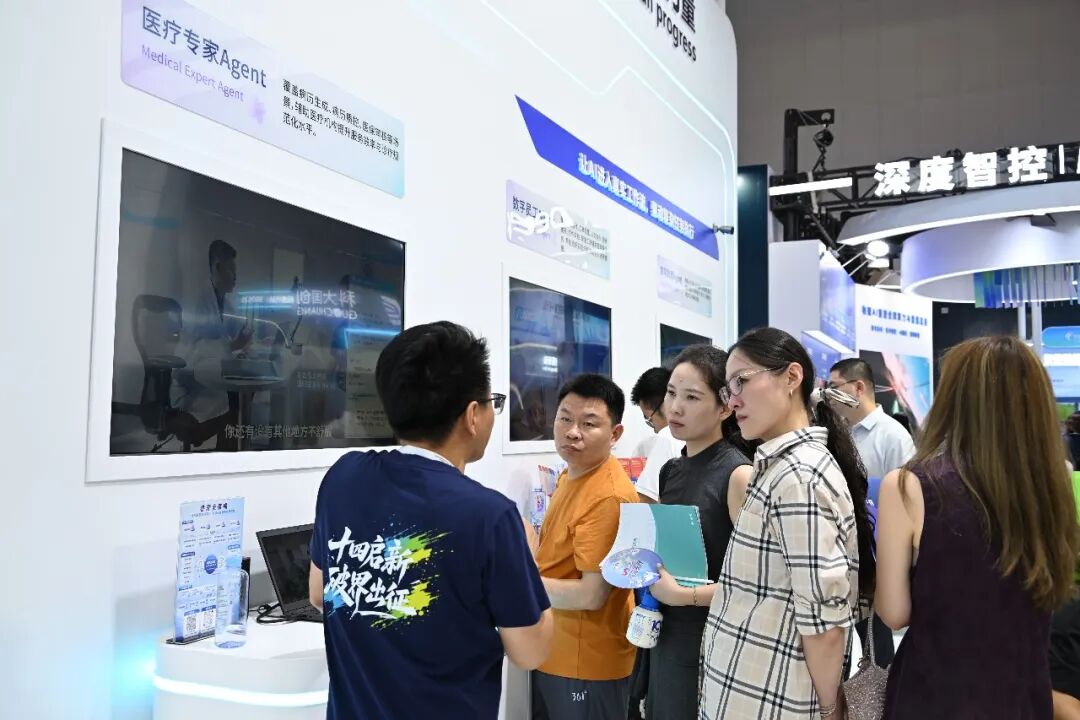
- U2‑Med: It possesses deep expertise spanning medicine, medical insurance and pharmaceuticals, covering clinical diagnosis‑and‑treatment, fund‑supervision and pharmaceutical‑service workflows. Beyond assisting physicians in generating standardized medical records and supporting clinical decision‑making, it acts as a risk‑control specialist for medical‑insurance reviews and commercial‑insurance claim processing. Real‑world business tests report 97 % accuracy for medical‑record quality control, 95.5 % for safety‑and‑ethics compliance, 94.1 % for post‑diagnosis and medication management, and 88.8 % for medical‑ and commercial‑insurance tasks, yielding an overall competence score of 89.1 % and outperforming peer large‑model solutions.
- U1‑OCR‑Med: Purpose‑built for medical documents. It delivers pixel‑level localization and precise information extraction even for illegible handwritten medical notes, stamp‑obscured prescriptions and complex diagnostic reports. It addresses the pervasive “dirty‑data” pain point in medical‑data entry and supplies grounded input for U2‑Med’s analytical workflows.
Steering Intelligence Toward Good | Embedding Agents into Workflows to Serve Real‑World Needs
For Unisound, “intelligence for good” is no mere rhetorical embellishment for technology; it means keeping AI human‑centered. A genuine AI partner augments rather than replaces humans: it supports specialists in professional contexts and collaborates with people across complex workflows. It must be reliable, controllable and traceable, while making advanced AI capabilities accessible and affordable to organizations and individuals.
At WAIC 2026, Unisound showcased three Agent clusters: Healthcare‑Specialist Agents, Digital‑Employee Agents and Digital‑Assistant Agents, focused on healthcare, organizational operations and smart interaction respectively. Moving beyond single‑turn Q&A and demo‑mode showcases, these agents embed into operational workflows, cooperate with humans on complex assignments, and convert model capabilities into actionable, verifiable and deliverable outcomes.
Healthcare‑Specialist Agent | Unifying Medicine, Insurance and Pharmaceuticals to Safeguard Public Health
Healthcare is a high‑stakes domain with zero margin for error. Clinicians are heavily burdened by manual medical‑record entry and compliance audits; countless hours are spent typing and retroactively completing documentation. Conventional spot‑check‑based quality control operates reactively with limited coverage. Valuable consultation time is eroded while compliance risks accumulate.
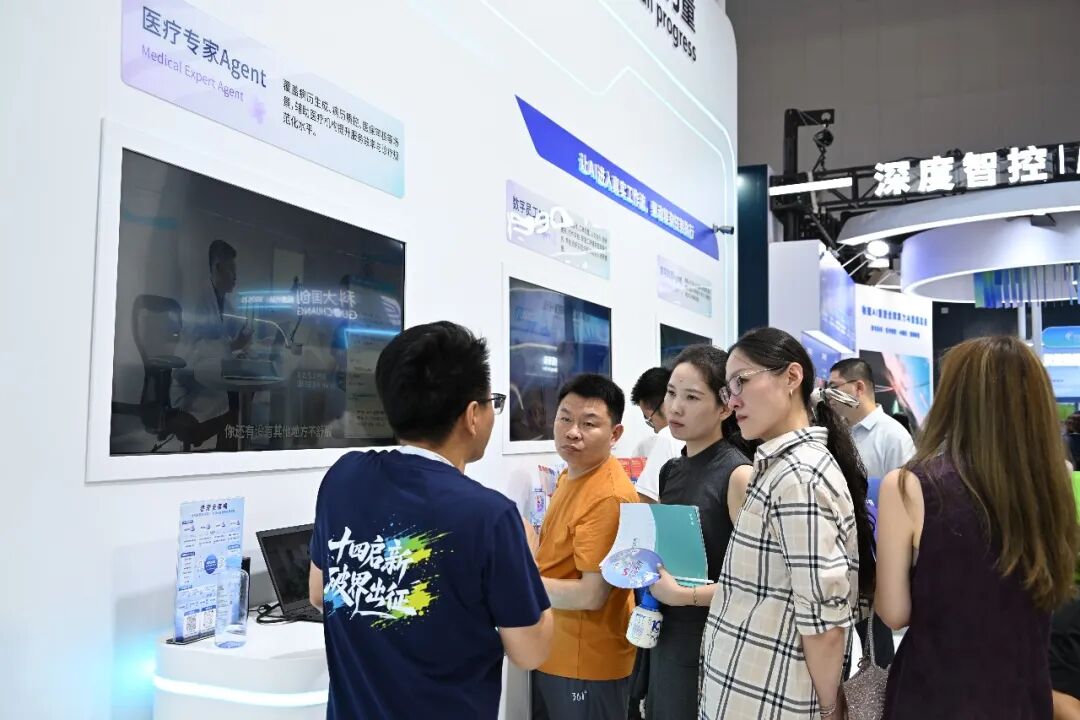
The Healthcare‑Specialist Agent integrates fully across pre‑consultation, in‑consultation and post‑consultation workflows. It captures doctor‑patient conversations in real‑time and auto‑generates standardized medical documentation, freeing clinicians from keyboard work. It performs real‑time validation of medical‑record completeness, logical consistency and regulatory compliance, shifting quality assurance from post‑fact accountability to in‑process early‑warning. It further unifies intelligent medical‑insurance auditing and pharmaceutical‑supply‑price compliance reviews, embedding risk governance for medicine, insurance and pharmaceuticals into every business step. Physicians can refocus on patient care while AI handles compliance‑related work.
Digital‑Employee Agent | Automating Workflows So Employees Can Focus on Creative Work
Within enterprises, many operational staff act as manual “system operators”. High‑frequency tasks such as work‑ticket handling, official‑document circulation, expense reimbursement and contract risk review span disjointed software platforms. Constant cross‑system switching and repetitive copy‑and‑paste work consume massive effort, introducing human error and unaddressed compliance blind spots.
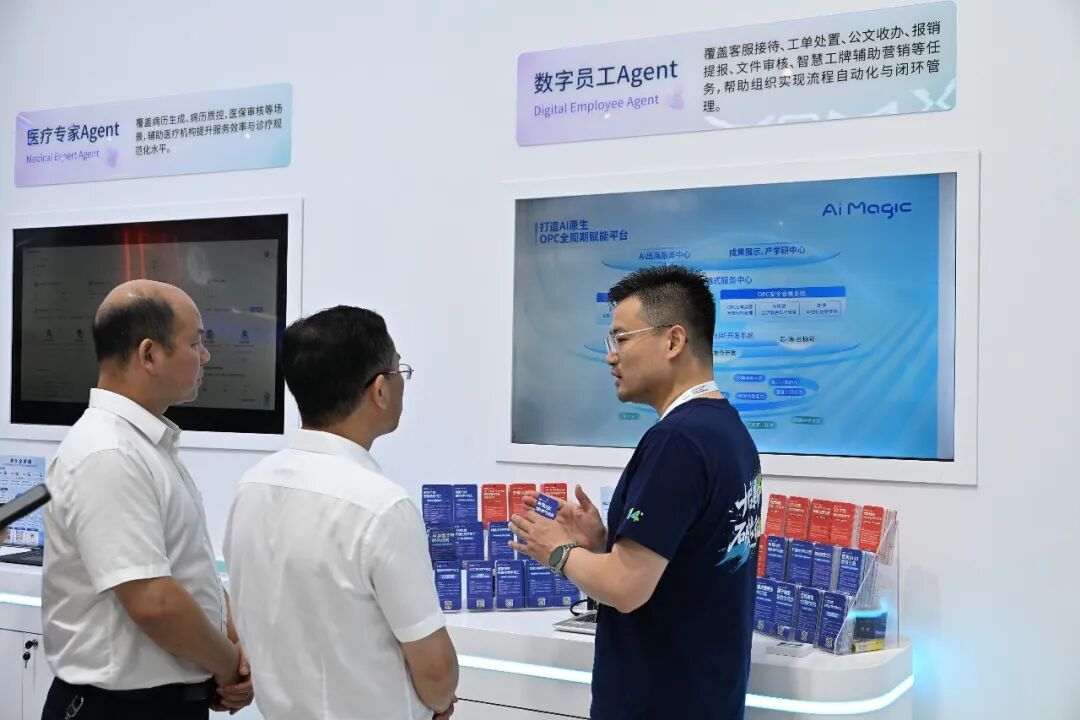
Unisound’s Digital‑Employee Agent covers scenarios including government‑affairs work‑ticket processing, multilingual customer service, official‑document intake‑and‑archiving, expense‑reimbursement workflows, contract risk auditing, medical‑insurance‑price inspection, form‑standardization and intelligent marketing. It compiles cross‑role, cross‑system repetitive manual operations into standardized, auto‑executing workflows. Technology’s value lies not merely in accelerating procedures, but in liberating staff from drudgery so they can devote energy to judgement, communication and creative output.
Digital‑Assistant Agent | Empowering Productive Work and Daily‑Life Convenience
In corporate and government offices, the most time‑consuming chores are often information retrieval and material sorting rather than original writing. Drafting official documents, reviewing contracts and compiling meeting minutes require labor‑intensive research, policy interpretation and logical structuring. Meanwhile, in automotive and everyday contexts, cumbersome interaction creates friction: touch‑screen operations distract drivers, voice commands frequently get interrupted, and smart‑cockpit systems often fall short of true intelligence or user‑friendliness.
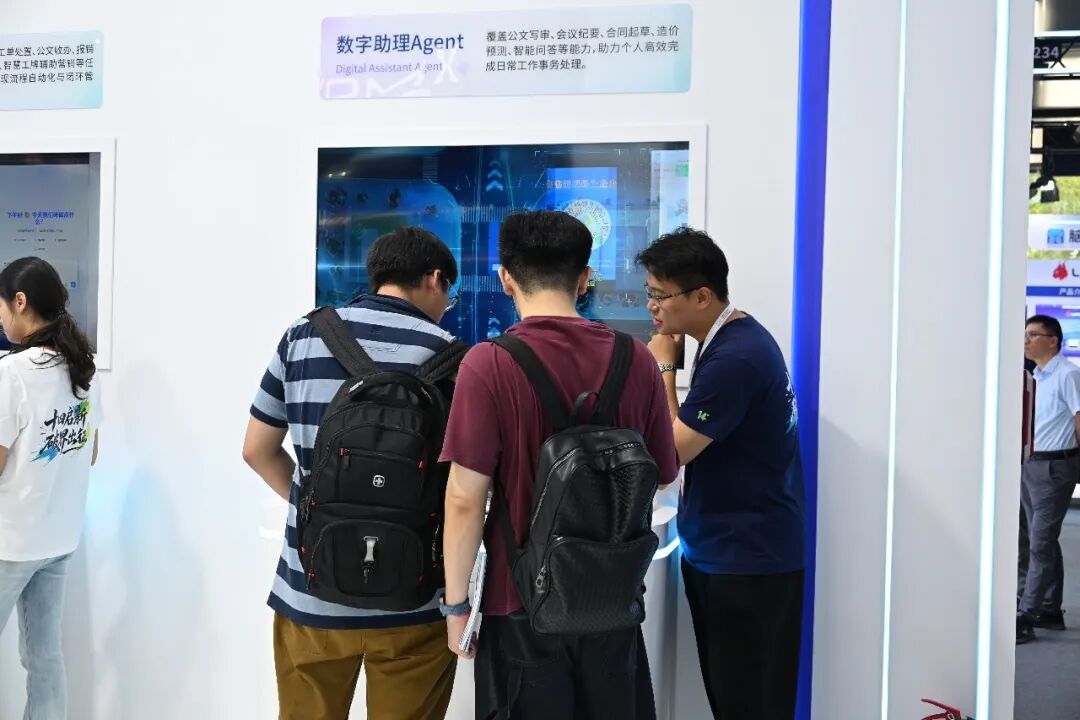
Unisound’s Digital‑Assistant Agent handles high‑frequency office workloads: official‑document drafting‑and‑review, meeting‑minute compilation, contract composition, bidding‑cost forecasting and administrative knowledge Q&A. It autonomously completes full‑cycle tasks: source‑material retrieval, contextual understanding, regulatory alignment, logical organization and deliverable generation, relieving users from information‑sifting drudgery. Deployed in vehicle cabins, the in‑car Agent enables fluid, continuous multimodal interaction. Drivers accomplish navigation, multimedia playback, vehicle‑control and information‑query tasks naturally. Instead of forcing humans to adapt to rigid systems, technology adapts to serve people intuitively.
From continuous model‑capability breakthroughs to three Agent clusters deployed in live workflows, WAIC 2026 presented Unisound’s milestone progress in evolving AI from “understanding problems” to “accomplishing tasks”. It embodied Unisound’s persistent commitment to “advancing intelligence uphigh and steering intelligence toward good”, and offered tangible responses to WAIC 2026’s theme “AI Partners for a Brighter Future”. By raising the capability ceiling of intelligent partners through technological innovation and bringing AI close to end‑users via real‑world workflow integration, Unisound co‑creates value alongside industries, organizations and individuals.
Intelligent evolution marches onward. Unisound will soon roll out two major upgrades to its speech‑technology stack: the next‑generation U2‑ASR and U2‑TTS.
- The new‑generation U2‑ASR will prioritize enhanced foreign‑language recognition and transcription, expanding the spectrum of languages that can be accurately comprehended and converted into text.
- The new‑generation U2‑TTS will deliver upgraded multilingual speech‑synthesis capabilities, generating natural, lifelike speech in additional foreign languages to lower barriers for cross‑lingual communication and content creation.
From understanding every utterance to speaking naturally across languages, U2‑ASR and U2‑TTS will jointly expand AI’s boundaries of perceiving the world and connecting people, building more natural, efficient interaction gateways for intelligent agents entering ever‑broader real‑world scenarios. Stay tuned.